You Can’t Manage What You Don’t Measure
Simple field guide for heifer weights, growth benchmarks, and practical measuring points without graphs
Why heifer weight matters
Focus on size and growth, not age alone
First-lactation performance is strongly linked to body size at calving, not just age. A heifer that calves too small may miss milk potential and may have more calving stress. A heifer that stays open too long adds cost every day she remains in the grower program.
What to measure and when
Weigh or estimate at each major management change
| Stage | Suggested timing | Why it matters |
|---|---|---|
| Birth | Day 0 | Starting point for colostrum, health, and early growth tracking |
| Weaning | At or near weaning | Checks early growth and pre-weaning nutrition success |
| Move to grower/TMR | About 4–6 months | Confirms the heifer is on track before ration change |
| Pre-breeding | About 10–12 months | Shows whether she is heavy enough to breed on time |
| Post-calving | Fresh period / early first lactation | Lets you compare calving size to herd mature body weight |
Simple measuring protocol
Keep it repeatable so your numbers mean something
Before you measure
- Stand the calf or heifer on flat, level ground
- Keep all 4 feet square under the body
- Hold the head in a natural, upright position
- Measure before feeding when possible
- Use the same person each time if possible
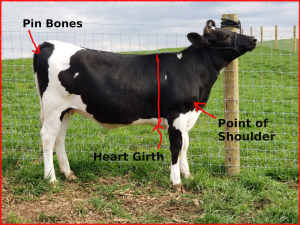
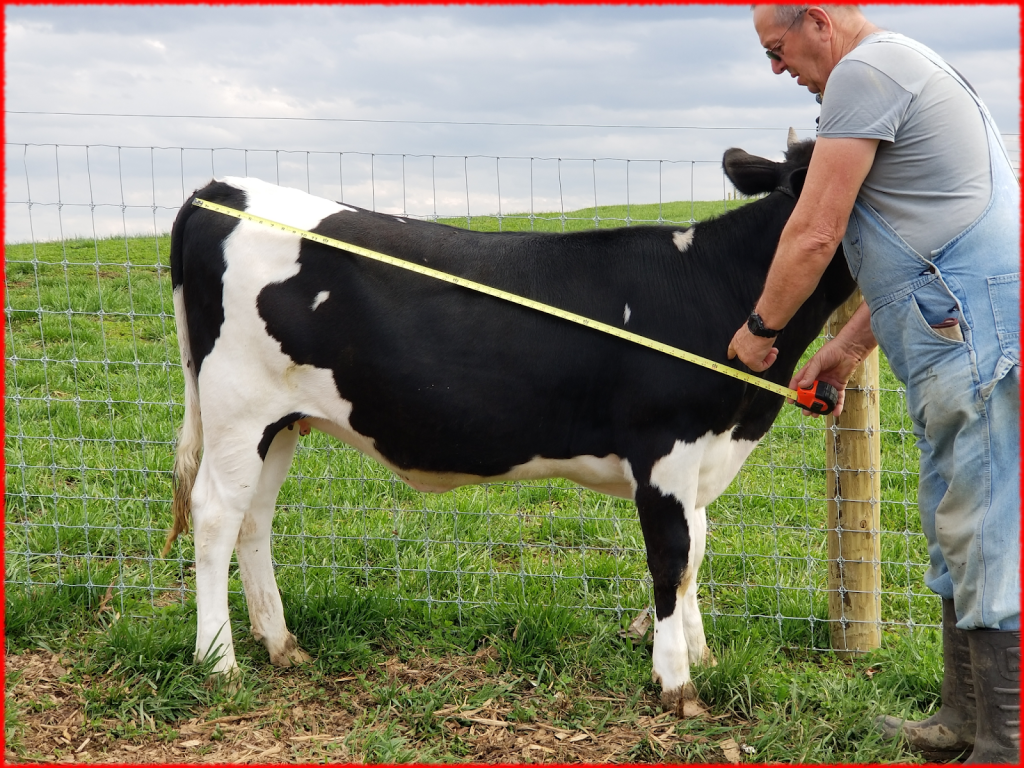
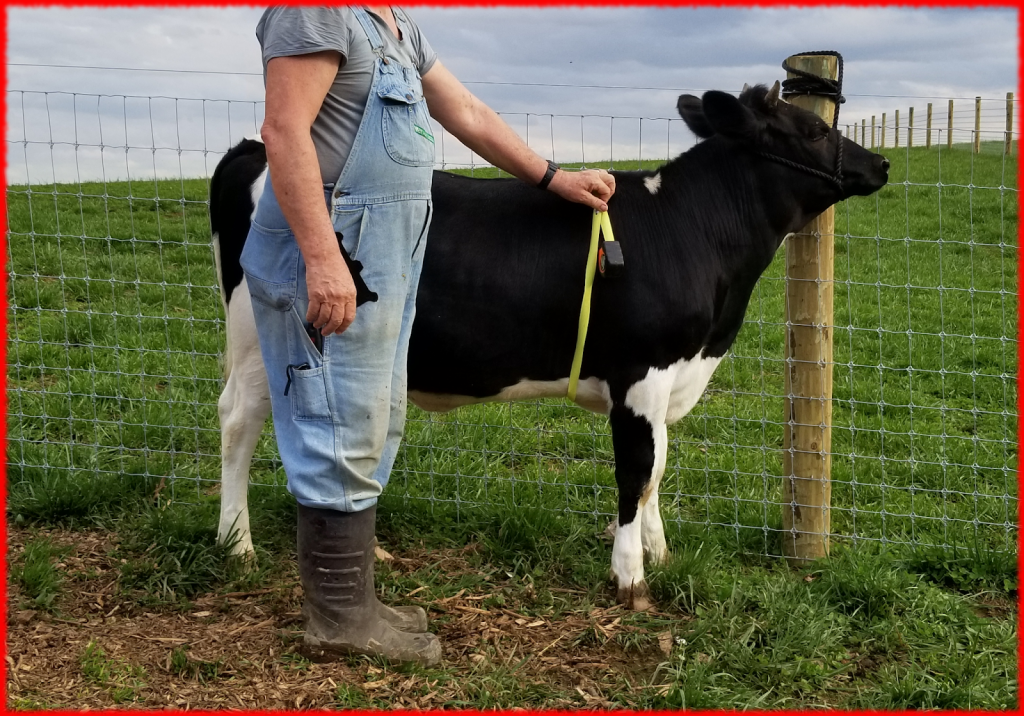
Heart girth
- Place tape just behind the front legs and shoulder
- Keep tape flat and snug, not tight
- Do not let the tape angle forward or backward
- Read and record immediately
- Use the same tape and same method each visit
Growth benchmarks to watch
Use mature body weight percentages as your checkpoint system
| Target point | % of herd MBW | How to use it |
|---|---|---|
| Puberty | 45% | Helps judge whether slow growth is delaying sexual maturity |
| Breeding | 55% | Main checkpoint to avoid breeding undersized heifers |
| Pre-calving | 94% | Indicates she reached adequate size before calving |
| Post-calving | 85% | Useful field benchmark after freshening |
Example: if mature cows in your herd average 1,650 lb, then a breeding target near 908 lb and a post-calving target near 1,403 lb gives you a practical size guide.
Use ADG as a management tool
Not just one weight — the trend between two dates
Average daily gain (ADG) helps you spot whether the ration, health program, housing, and feed access are actually working.
ADG = (Current weight − Previous weight) ÷ Days between measurements
If ADG is too low
- Check starter or TMR intake
- Review scours, pneumonia, and parasite pressure
- Look for overcrowding or poor bunk access
- Check water access and pen comfort
If growth is too fast
- Watch for overconditioning
- Review energy density of the ration
- Do not push weight gain at the expense of frame growth
- Keep breeding and calving targets in view
What to record every time
Good notes make the numbers useful
| Record | Reason |
|---|---|
| Animal ID | Links each measurement to the right animal |
| Date | Needed to calculate ADG correctly |
| Age or birth date | Lets you compare size to age and breeding targets |
| Heart girth or actual weight | Main growth value |
| Observer | Helpful when measurements do not match expected trend |
| Health notes | Separates nutrition issues from disease problems |
| Pen or ration group | Makes it easier to find group-level problems |